

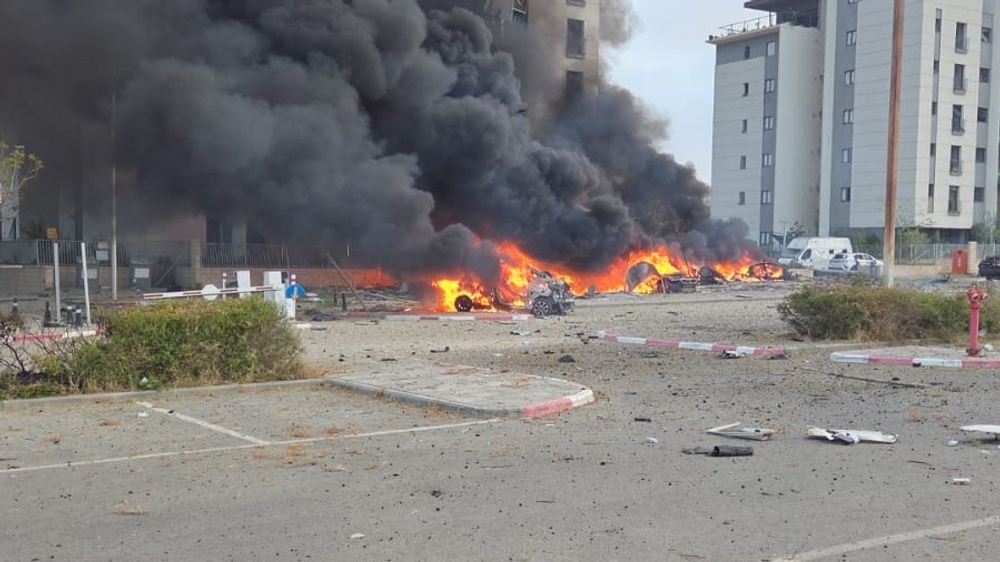
Missile Barrage Hits Haifa on Sunday Evening
Sunday evening, June 15, 2025, Iranian troops fired a massive barrage of ballistic missiles and armed drones at a number of Israeli cities, including Haifa, Tel Aviv, and Petah Tikva, making the incident one of the worst escalations of wars in Middle Eastern history. According to The Guardian, the attack was a military offensive against Iran that was in retaliation for recent Israeli attacks on Iranian nuclear enrichment sites in Natanz and suspected IRGC command hubs in Tehran. Both the impact of the Iranian offensive and its precision took the military analysts and Israeli intelligence by surprise as they launched multiple waves of long-range ballistic missiles, cruise missiles, and kamikaze drones, and all were launched on the Iranian territory and their proxy forces in Iraq, Syria, and Yemen, as reported by CNN. The offensive was the biggest direct military action of Iran against Israel since ever.
According to the data of the Magen David Adom (MDA) of Israel, more than 120 civilian casualties, including stab wounds, burns, and stress responses, were covered by emergency medical services. The Rambam Medical Center, in Haifa, was put on high alert with over 50 victims being transported to the hospital following the planes and subsequent fire in residential and industrial areas. The missile fragments hit a crowded district of Tel Aviv called Petah Tikva, where a number of children and elderly inhabitants were wounded in a crowded park. Rescue and fire activities were conducted with active air raid sirens as Israel Home Front Command encouraged its citizens to stay in the bomb shelters in a report by Haaretz.
Al Jazeera and Israeli Channel 12 aired images of the area being lit up by explosions in the night sky in Haifa and Tel Aviv, with wall-to-wall smoke and fire erupting out of several buildings. According to Ynet News, A direct strike on a warehouse in a port district of Haifa caused chains of secondary explosions, due to which fears of exposure to hazardous materials arose, and emergency responses about the environment emerged. According to military analysts referred to by The Washington Post, the coordinated character of the assault was intended to defeat the multi-level missile defense system installed by Israel- Iron Dome, David Sling, and Arrow-3, which, though successful in its interception capabilities to most threats, several warheads had managed to extend through and cause severe destruction. As a direct reaction against the Iranian attacks, the Israeli Prime Minister Benjamin Netanyahu summoned an emergency security cabinet meeting late Sunday night, and made the following stern warning: Israel will retaliate with full force. He will attack us, but no one will be left unharmed.”
According to Reuters, the Israel Air Force initiated raising strike forces and launched alleged limited retaliatory air attacks on Iranian-related targets near Damascus and Baghdad. Growing concern has been expressed ever since by the world community about the possibility and danger of wider regional conflict, with an emergency session of the United Nations Security Council slated to take place. In the meantime, Haifa and the cities around it are on acute alert with the Emergency teams undertaking the recovery and damage control work, women in effect in the wake of the Sunday night attack.
Haifa- Damage and Emergency Response
A strategic city port located in northern Israel, Haifa took most of the Iranian missile attack, and it was also hit by some of the most devastating results of the attacks. The Times of Israel states that five projectiles had clearly beaten Israel’s air defense systems, causing direct impacts on the residential and commercial areas in the city. There is also an account that there was one of the missiles that hit an apartment building at Kiryat Yam neighborhood, where there were several casualties and collapse of the building. According to the Associated Press (AP) rescue squads, firemen and military rescue teams ran in to save the situation as harrowing blazes broke out across different regions.
The worst fire was in the Haifa district of Hadar, where a multi-storey residential building was incinerated, leaving families trapped before first responders could get to the upper storeys. The Israeli volunteer emergency service ZAKA, which specialised in searching and rescuing people in high-casualty incidents, stated that their teams had extracted at least six bodies from the rubble and were still searching through the debris in order to find the living. The spokesperson of ZAKA said that the Haifa scenes were symbolic of a war zone.
It has also been captured on mobile footage and CCTV, where fireballs were popping up on the Haifa skyline and filled social media with real-time videos streamed there. Rafts of dark gray and black smoke covered the city, causing massive panic. (Sirens gave warning throughout Haifa and thousands of people poured into bomb shelters). According to Channel 12 News, some of the city’s public infrastructure, such as the electricity lines, the city’s transport routes, and water pipes, were broken, and city chiefs had to shut down some of the city’s facilities temporarily. Adding more hindrance to rescuing missions, falling debris from the missiles, as well as the secondary fires, blocked most of the neighborhoods.
At least in some regions, especially around the Haifa Bay, rescue services were forced to manually go through dangerous chemical vapours because of failing industrial plants, and health authorities started to warn about a possible air quality threat, according to Haaretz. People explained that it was traumatizing and unprecedented. According to one witness interviewed by The New York Times, the group said, “We saw air strikes, but this is unprecedented. It is as though the whole city was being assaulted this time.” The Israeli Defense Forces (IDF) recognised the mental burden and started sending mental health care assistance teams to surrounding communities.
Fire at Oil Refinery Claims Lives
Among the most devastating effects of the strike was a missile that struck the Bazan oil refinery located in the vicinity of Haifa. Al Jazeera states that the blast sparked a huge fire that killed three workers and injured many others. Firefighters hurried to the spot to quench the fire and rescue more victims. Before the attack, Iran had sent a message to Israeli civilians warning them to leave places near military bases. According to The Jerusalem Post, Iran said it was a valid military target, any spot that carried military infrastructure, and residents should keep at a distance. Reuters alleged that the Israel Home Front Command issued a high alert on cities in the northern territory of the country, with specific emphasis on the Haifa region.
Iran Statement and Strategic Interest
According to reports by the state-sponsored Press TV of Iran, senior Iranian military officials said the missile and the drone attacks were a legitimate and proportional response to what they termed as unprovoked Israeli aggression that targeted Iranian nuclear facilities and the senior Revolutionary Guard commanders earlier in the week. At a televised conference, Brigadier General Amir-Ali Hajizadeh, commander of the Islamic Revolutionary Guard Corps (IRGC) Aerospace Force, expressed that the operation, which the Iranian Defence Ministry referred to as the operation True Promise, was intended to show off the long range striking power of the Islamic Republic of Iran along with its willingness to react to any more Israeli raids.
Iran insisted on precision-guided ballistic missiles, with some imbued with sophisticated resistance to GPS jamming, and swarming drone tactics were utilized to explicitly overwhelm Israeli missile defense mechanisms, including Iron Dome, David Sling, and Arrow 3, which had been heavily overcome in the course of the several-hour strike. Press TV continued to add that the Iranian drones that were launched inside the western Iranian bases and southern Iraq, as well as ballistic missiles launched at the central Iranian bases, were programmed to bomb military logistic centers, air defence posts, and intelligence-command facilities located in the northern and central areas of Israel.
According to CNN, it is the most direct military attack of Iran on Israel in history. It marks a drastic change in a policy that represents building proxy wars through Hezbollah and Hamas, among other militias, which it has held since the 1980s. Cyberattacks, secret assassinations, and bombings are just some of the tactics of a shadow war that has run between Iran and Israel for decades. But the June 15 strikes constitute a military confrontation that is open and in the face (in the circumstances of the June 15 strikes, it is even said to be an open act of aggression), which is a turning point that can lead to a new era of open hostilities between the two countries.
During one such live broadcast scrutinized by CNN International, security analysts observed that Iran had two messages namely; to warn or act as a precaution against the work of Israeli aggression in its soil in future and to remind the world in general, the United States, and the Gulf countries in particular that Iran has the military capabilities of conventional warfare in response to any incitement. Moreover, Iranian foreign minister Hossein Amir-Abdollahian, who spoke at a regional security summit in Doha hours after the attack, claimed: Iran does not want war; however, it will not allow any violations of its sovereignty. We will respond by force to any invasion of Iranian land.” Such intensification has created tremors in capitals in the region with concerns of a more widespread war–like situation in the Middle East. Intelligence updates provided to NATO partners indicate that Iran might be deploying more missile groups to portions in the West, as the republic might be gearing up to establish additional operations, based on the reaction plan taken by the state of Israel.
Technologies Israeli Defense Systems and Interceptions
In spite of the magnitude of the attack, virtually all the projectiles were intercepted by Israeli missile defense networks, Iron Dome, David Sling, and Arrow 3. Nevertheless, according to The Wall Street Journal, authorities made the confirmation statement that “small quantity of ballistic missiles made it through to the air defenses” and had created fires and humanities in residential locations. As indicated by Ynet News, this entailed directing missiles at major infrastructure, targeting roads, water pipes, and communication towers in Haifa and other surrounding areas. The cost of the increased violence on human life and blood has been very high. The New York Times states that since the outbreak of the confrontation, at least 27 Israeli civilians have been killed, with four elderly people died in the Sunday attacks on Haifa and central Israel. In the meantime, 224 fatal casualties have been reported by Iran after previous Israeli air attacks on Tehran and other places, in the majority of cases, civilians. The BBC News quoted the Health Ministry in Iran to confirm this.
Strikes Other than Haifa
Other cities in the North including Tamra, were also damaged as reported by Haaretz. One person also died, and some were hurt after some debris hit a residential house in Tamra. Due to falling pieces of missiles and rocket parts, fires broke out in multiple areas of the Galilee. The recent flare-up is a continuation of a recent military build-up that has been going on since the beginning of this month. The Washington Post notes that Israel has conducted aerial attacks against the Iranian nuclear enrichment facilities, the headquarters of the Iranian Revolutionary Guard Corps (IRGC), and even against the state broadcasting facilities in Iran. The barrage by missiles over Iran on Sunday was seen to be a response to these operations. The military leaders in Iran had threatened that further Israeli attacks would face even greater counterattacks, according to CNN International.
Diplomatic Pressure and International Response
The world community has responded vehemently to the rising violence. The United States has sent air defense equipment to the Middle East to defend the interests of its allies, and according to an article in Time Magazine, it has avoided being directly involved in the conflict. President Biden has urged maximum restraint and for both sides to go back to the diplomacy path. The G7 countries, which have recently gotten together in Canada this week, have also demanded a full stop to hostilities, as reported by The Guardian. Al Jazeera had also mentioned the activities of Qatar and Oman as intermediaries who had been trying to broker a temporary ceasefire. This has, however, been met with seeming mistrust by both Iran and Israel in the role of third-party mediation until their core security concerns are met.
Markets and Regional Stability
The regional effect does not only entail human life. Bloomberg reported that the oil prices shot up by close to 7 percent in the wake of the strikes at the Haifa and Tehran refineries. The Middle East region as a whole is under financial turmoil, where investors are terrified of energy supply networks being interrupted. The Financial Times additionally identified increased military alerts in adjacent nations, such as Jordan, Lebanon, and the United Arab Emirates, which are all ramping up border patrols and airspace monitoring. Iran’s IRIB broadcasting network was disabled at least briefly, in a novel countermeasure, due to Israeli hackers. According to the Washington Post, Iran accused the network outage of foreign sabotage, and it happened at the time when missiles were being fired at media and military installations in Tehran.
According to the report of Reuters, Israel has denied hitting the Iranian media stations directly, and they had insisted that the army stations and missile areas had been included in their operational focus. Military analysts warn that the situation may run out of control into what has been so far the interaction. According to an analysis by the RAND Corporation, a strike on either side, whether civilian or nuclear infrastructure, may incline a regional war where the Hezbollah in Lebanon or Syria are involved. The Atlantic Council issued a brief as well, citing the possibility of both Israel and Iran being engaged in existential threat doctrines. As a result, it is hardly possible to de-escalate without external interference.
Conclusion: What Next!
The missile attack on Haifa is an eventful and somber record in the series of warfare between Iran and Israel two regional players whose decades-old ideological, political, and military clashes are deep-rooted. The new launch has significantly increased stakes and it is the people who have suffered most in a war being waged in crowded cities. The people of Haifa, who are currently struggling to deal with loss, trauma, and destruction, are the newest to become victims of a geopolitical conflict that is far out of their control. According to Deutsche Welle (DW), humanitarian agencies in Israel, like the Red Cross and aid agencies under the UN, have requested the urgent United Nations mediation in order to stop the further killings and put an end to the destruction of civilian facilities.
In spite of the soaring demands of the European Union, United Nations, and the Arab League to exercise restraint and talk, both Tehran and Jerusalem are emitting intransigent and belligerent rhetoric. Israeli wise men are repeating the same thing, the words of a top Israeli official, the Defense Minister Yoav Gallant, said: We will reply sternly to any assault. As quoted by The Jerusalem Post, he says Our adversaries will go to a very high price for internal Israeli lives lost. The revolutionary guards of Iran have, in turn, threatened that any other Israeli revenge will receive what they term as retaliation, in effect fuelling the violence and back-and-forth retaliatory military efforts. According to Al Jazeera, capital cities in the region, like Amman, Riyadh, and Ankara, have initiated crucial diplomatic efforts to avert a bigger war. Qatar and Oman, which are said to be influence peddlers, are reportedly involved in the backchannel diplomacy of mediating between the parties in secret. But until now, no formal ceasefire mechanisms seem to exist. Unless there is immediate diplomatic intervention, international analysts fear the situation can run out of control leading to a full-scale conflict in the region, which could also open the door of proxy forces in Lebanon, Syria, Iraq, Yemen, and an escalation of interest by global powers. The Economist said such a conflict would destabilize fragile states, interfere with the supply chain of global oil reserves and cause a humanitarian crisis that would impact millions of people in the Middle East. With the rest of the world holding their breath in frustration, everyone is wondering whether it will be regional diplomacy, international pressure, or simple fatigue that will drag the warring parties back to their senses. And until these days, cities such as Haifa, Tel Aviv, and Tehran are waiting to know what will happen next in one of the most threatening pages of contemporary Middle Eastern history.


